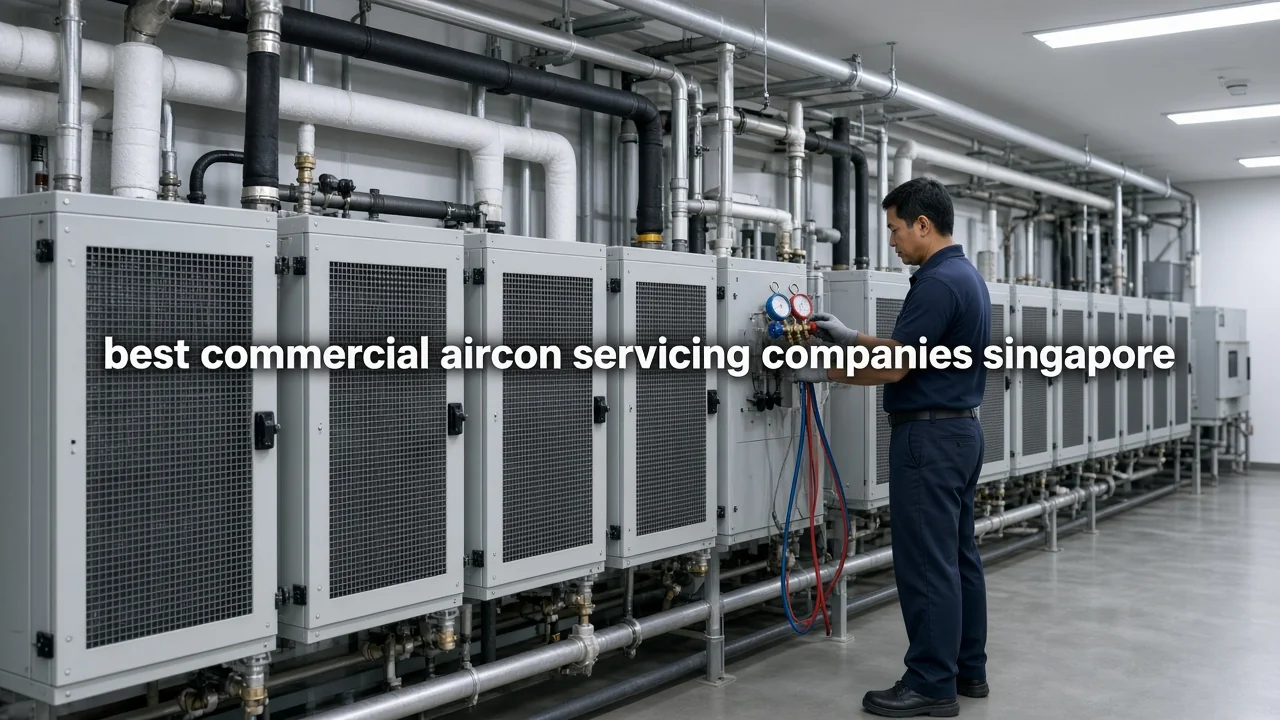
A commercial aircon that dies on a Saturday lunch rush is not a homeowner inconvenience. It is lost covers, a sweaty clinic waiting room, or an office that sends everyone home. I do not pick commercial servicing companies the way I pick a one-off residential wash. The system is bigger, the hours are longer, and the contract has to survive a year of real runtime, not one tidy visit.
Need quotes fast? Tell us about your project below and get up to 3 free quotes from vetted commercial aircon servicing companies.
This is my 2026 shortlist for offices, shops, F&B and buildings with proper plant. I am ranking teams by whether they can actually maintain fan coil units, cassettes, ducted systems and VRV or chilled-water plant, not by who has the loudest ad. Every site is different. Use this as a starting filter, then walk your own equipment list before you sign.
What I look for before I recommend anyone
Before names, this is the filter I use:
- The right licence for the work: If the job is notifiable ACMV work, I want a BCA-registered ACMV contractor, and I check the registration myself. A workshop sticker is not a registration.
- Commercial scope, not a home visit in a polo: A crew that only washes wall units will struggle with cassettes, ducted indoor units, AHUs and condensers on a roof. I ask which of my unit types they service every month.
- A written visit, every time: Filter, blower, coil, drain, gas pressure and a basic electrical check should be on the sheet, with a report per unit. If there is no report, there is no history when a compressor fails.
- A response time in writing: For a shop, same-day or next-morning is the test. For a chiller that cools a whole floor, I want a named after-hours number, not a WhatsApp that goes quiet.
- A site walk before the price: Anyone who quotes a monthly figure from a photo of the logo on the door is guessing. The guess always comes back as extras.
What a proper commercial visit should include
A quiet office can often live on a quarterly cycle. A clinic, salon or F&B kitchen running twelve hours a day cannot. Grease and runtime load coils much faster, so I expect monthly or at least bi-monthly attention there. A contractor who prices a kitchen on the same schedule as a back office has not looked at the site.
Per visit, at minimum, I want filters and blowers cleaned, coils inspected and cleaned, drains flushed, refrigerant pressure checked, and controls looked at. Chemical wash and overhaul are condition-based, not an automatic upsell every quarter. Parts, refrigerant and after-hours call-outs can sit outside the base fee. That is fine. What is not fine is leaving all of that blank so the real price appears after the deposit.
What I tell clients to budget in 2026
Menu prices are misleading, so I talk in bands after a walkthrough, not before:
- Small shop or clinic, about 4 to 8 indoor units: often around S$250 to S$400 a month on a maintenance contract, with after-hours slots if you cannot shut during trade.
- Mid-size office or retail VRV, about 10 to 20 zones: often around S$400 to S$700 a month, with condition reports the facilities team can file.
- Larger sites, 50-plus zones or stacked rooftop condensers: commonly S$1,500 to S$3,000 or more a month once plant coordination is real work.
A hotel, hospital or data centre with chillers and cooling towers is not in those bands. Those contracts are priced off a survey, spare-parts plan and a guaranteed response. If someone gives you a neat package price for a chilled-water plant without opening the plant room, walk away.
Companies I would actually put on a commercial shortlist
1. Winsteam Engineering — plant, hotels and critical sites
winsteam.webp
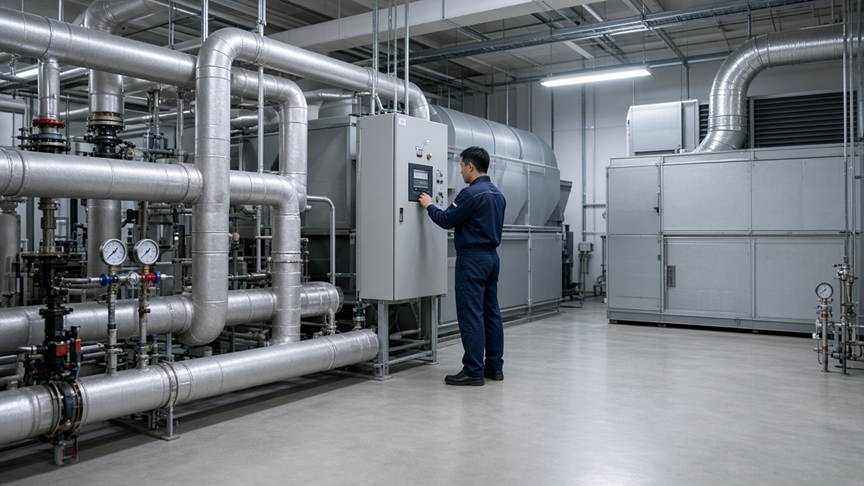
When the job is bigger than cassettes, Winsteam is the first name I put on the table. They have been an ACMV contractor since 1994 and they take the full lifecycle: design, install, commission and planned preventive maintenance. The work I associate with them is chilled-water plant, air handling units, fan coil units and the kind of occupied buildings that cannot shut down, including hotels, hospitals and data centres. They talk about SS 553 commissioning and written compliance records, which is what a facilities manager needs when a chiller trips, not a before-and-after photo of a filter.
Best for: Owners of central plant, precision cooling, or multi-AHU buildings who need a contractor, not a cleaning crew.
My tip: Ask for the guaranteed response time on a full-plant trip, and whether critical spares sit in Singapore or have to be ordered.
2. Natural Cool — a listed group with a real commercial desk
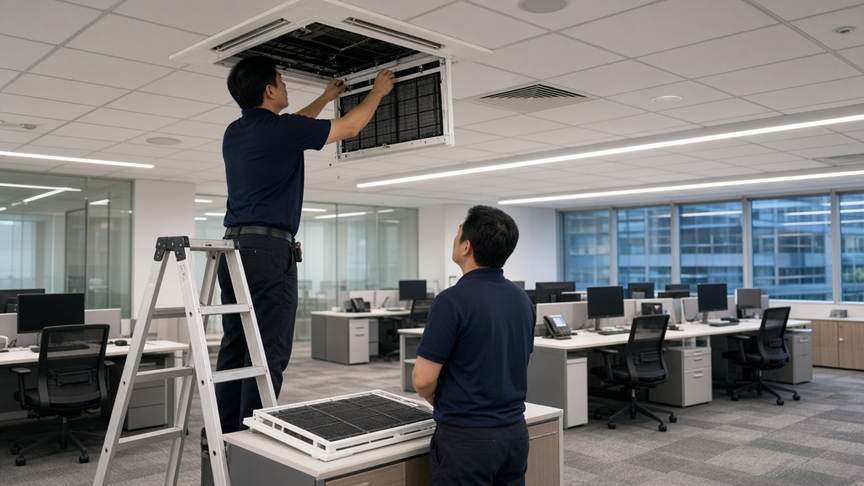
Natural Cool is not a one-van operator. The group has been in air-conditioning since the late 1980s, it is listed, and it runs a commercial service team for offices, malls, schools, hospitals, warehouses and F&B, on top of the residential work most people know them for. I like them when a site mixes brands. Their commercial book covers the usual names, including Mitsubishi Electric, Daikin and Panasonic, and they already have a facilities-style preventive maintenance habit rather than a one-off chemical wash pitch.
Best for: Property teams and multi-site operators who want a stable company behind the technicians.
My tip: Ask whether your building sits with the commercial team or gets pushed onto the residential servicing queue. Those are not the same job.
3. KBE Air Conditioning & Engineering — strong on commercial ACMV, not just wall units
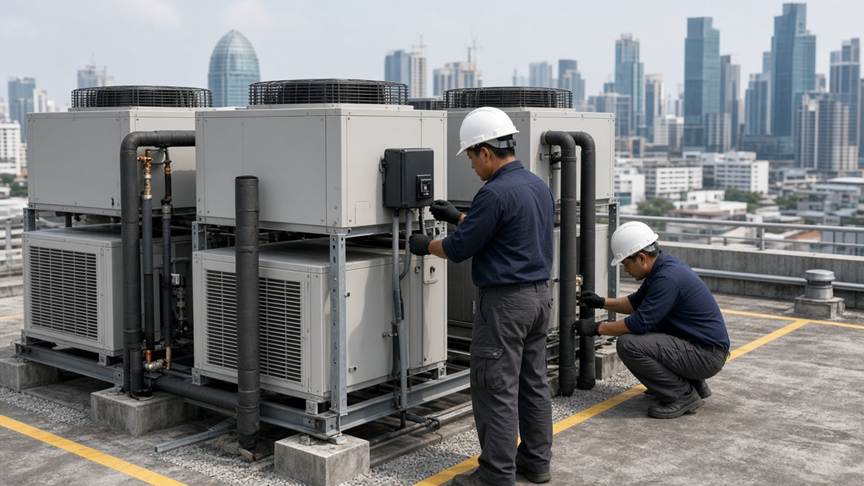
KBE is the contractor I look at when the brief is VRV, air handling units, chilled water or cooling towers, plus the ventilation that sits next to them. Their roots go back to Kang’s Brothers Electrical in the late 1970s, and the current company has spent years on commercial and industrial mechanical and electrical work. The commercial list they talk about includes food courts, retail, schools and care facilities. That mix matters. A team that has lived with long trading hours tends to plan visits around operations instead of insisting you close the floor at 2pm.
Best for: Retail, education and mixed commercial sites that need VRV or central plant, not a home servicing package.
My tip: Confirm the named account person and whether kitchen exhaust or other M&E sits in the same contract or becomes a second vendor.
4. FC Engineering — offices, F&B and cassette-heavy sites
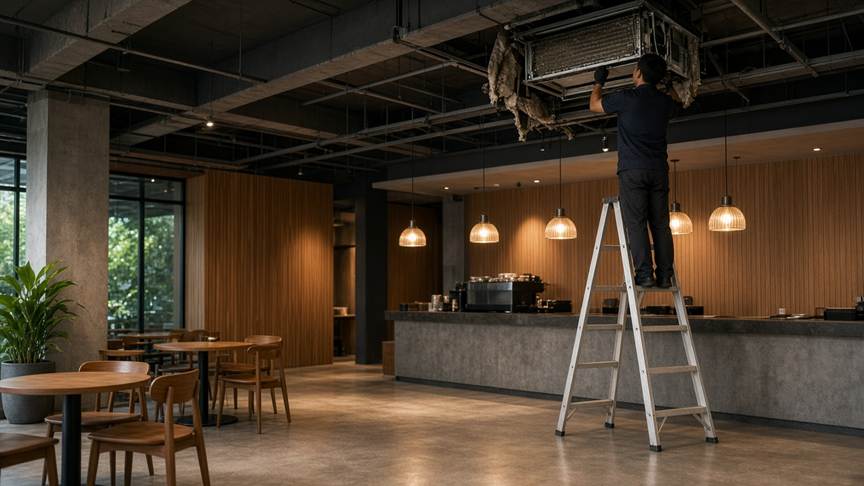
FC Engineering is the practical pick when the estate is offices, shops, malls or F&B rather than a hospital plant room. They are a BCA-registered ACMV contractor, and the servicing package is built for commercial kit: fan coil units, air handling units, VRV and VRF, cassettes and condensing units. I like that the schedule is explicit, from bi-weekly to monthly to quarterly, with a service report each session and a 24/7 callback reserved for contract clients. That last point is the one I test. Emergency cover that only exists for contract clients is normal. Emergency cover that nobody can describe is not.
Best for: Cafes, clinics and mid-size offices that want scheduled commercial servicing without hiring a full plant contractor.
My tip: Get the cleaning checklist in the quotation. A customisable checklist is only useful if yours is written down.
5. Billy Aircon — ducted and VRF for SMEs that need a night number
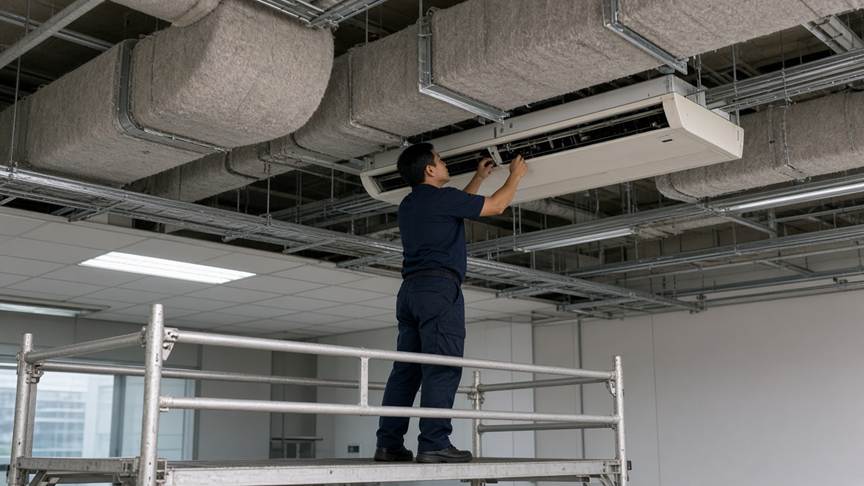
Billy Aircon is the name I use for smaller commercial premises that run ducted systems or VRF, not a house with three wall units. They have been servicing Singapore since 2003, they cover cassettes as well as ducted and VRV, and they sell annual contracts so nobody has to remember the date. They also advertise a 24-hour response and a 90-day workmanship warranty, which is the right shape of promise for a shop that cannot wait until Monday. I still treat advertised registration and response times as claims until I see them in the contract and on the BCA register.
Best for: SME offices, showrooms and F&B with ducted or VRF systems that want a direct contractor, not a platform middleman.
My tip: Ask what the 24-hour promise actually means: a technician on site within a stated window, or a call-back the next morning.
6. Lion City Aircon — shops and offices, if you want the contract read aloud
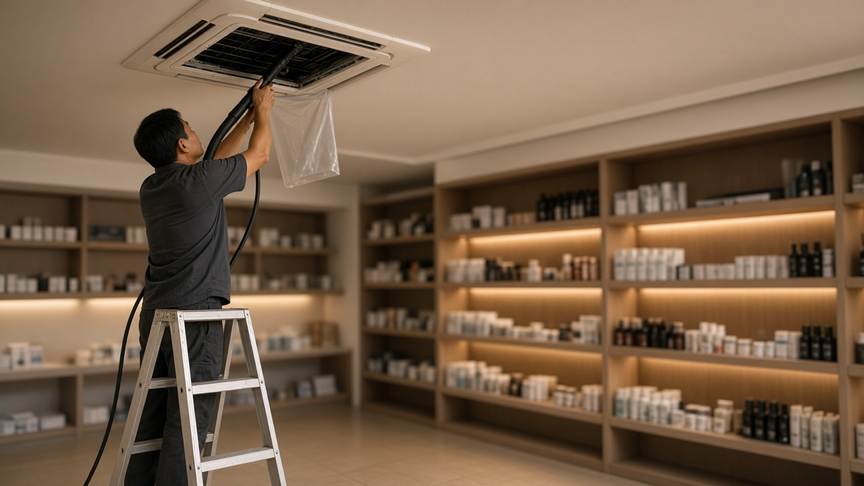
Lion City is the one I send owners to when the site is a shop, clinic or modest office and the risk is a cheap contract that only works if the technician skips the coil. Their commercial advice matches how I buy: walk the site, match frequency to runtime, write the exclusions, and sometimes tell you to stop servicing a dying unit. A ten-year-old commercial cassette that is eating electricity is not always a servicing problem. Sometimes it is a replacement problem, and I respect a contractor who says so instead of locking you into another year of resuscitation.
Best for: Independent shop and office owners signing their first real maintenance contract.
My tip: Make them show a sample service report from a cassette or ducted unit like yours, not a wall-unit photo.
Patterns I would not sign, even if the price looks kind
I am less interested in a public blacklist than in the habits that show up on bad commercial jobs. A phone quote with no walkthrough. A per-unit price that only works if nobody opens the coil. Gas top-up offered on every visit with no leak test. No written report. No named breakdown time. A long lock-in with no performance clause. And the classic residential trick dressed up as commercial: a chemical wash sold as the only option when a general service would have done.
The other trap is sending a home-servicing crew into a cassette ceiling because the company name sounds big. If the first question is not “cassette, ducted, VRV or chilled water?”, you are talking to the wrong desk.
How I would buy this if it were my outlet
1. List the equipment before you call. Indoor unit count, outdoor condensers, ducted or cassette, hours you run, and whether there is an AHU or chiller.
2. Make three contractors walk the same site. Same scope, same exclusions, same response time, or the quotes are not comparable.
3. Read the exclusions out loud. Parts, refrigerant, chemical wash, after-hours labour and access equipment should have rates, not vibes.
4. Demand a sample report. If they cannot show last month’s report from a similar unit, they will not produce one for you.
5. Check BCA registration on the official directory. Then match the company name on the invoice to the name on the register.
6. Set the visit around trade, not around the contractor’s convenience. A good commercial crew plans ladders and water so you are not mopping the dining room at 7pm.
7. Keep a small contingency. The first proper survey often finds a drain, a leak or a capacitor that the previous cheap contract never wrote down.
My bottom line
There is no single best commercial aircon company in Singapore. Winsteam is where I start for plant and critical buildings. Natural Cool and KBE are the names I trust when the estate is properly commercial and multi-brand or VRV-heavy. FC Engineering, Billy Aircon and Lion City Aircon are the ones I would meet for offices, F&B and shops that need a contract, a report and a person who answers when a cassette dies on a Saturday.
Walk the site. Get the scope in writing. Check the registration. The owners who stay cool through the year are rarely the ones who bought the cheapest monthly figure. They bought the team that will still be there when the drain blocks.
